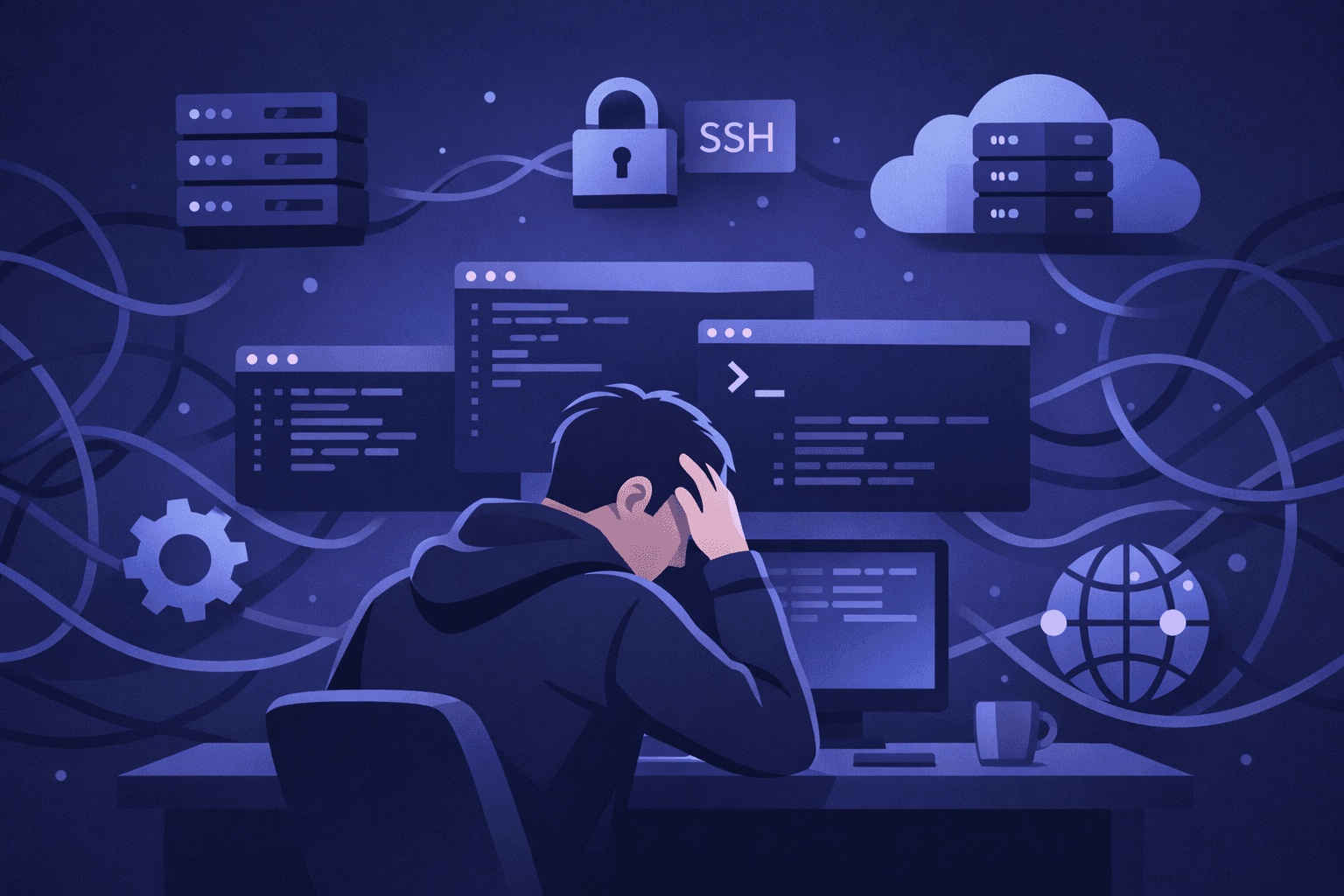
The Problem with Self-Hosting AI Agents
Setting up your own AI agent shouldn't require a DevOps degree. Yet, for most users trying to deploy OpenClaw or similar tools, the journey looks something like this:
- Rent a VPS - Navigate confusing pricing tiers, choose between providers, figure out what specs you actually need
- SSH Configuration - Generate keys, manage permissions, deal with firewall rules
- Networking - Port forwarding, reverse proxies, SSL certificates
- Docker Setup - Install Docker, configure compose files, manage volumes
- Maintenance - Updates, backups, monitoring
Why We Built AutoClaw
AutoClaw eliminates all of this complexity. With a single click, you get:
- Pre-configured VPS with optimal specs for AI workloads
- Secure networking via Tailscale (no port forwarding needed)
- Automatic Docker deployment with sensible defaults
- Built-in monitoring and easy updates
The Technical Reality
Most users just want their AI agent to work. They don't want to spend hours debugging nginx configurations or figuring out why their WebSocket connections keep dropping.
We've handled the infrastructure so you can focus on what matters: using your AI agent to get things done.
What's Next
In upcoming posts, we'll dive deeper into specific technical challenges and how AutoClaw solves them. Stay tuned!